
There is this story of a professor at a renowned university who divided his class into small groups and gave them an assignment of making money – within two hours, from a corpus of $5 and to make a three-minute presentation thereafter. All the groups followed the traditional TACTICS of making money – except for two. The team that earned the second position ignored the corpus of 5$. Instead, it made reservations in local restaurants and ‘sold’ the reservation times to aspiring customers who wanted to skip the wait. They earned hundreds of dollars + they saved the corpus of $5.
But the winning team used a STRATEGY – of ‘selling’ their three-minute presentation time to a company interested in recruiting candidates from the university. It earned $650 + saved the corpus of $5 + conserved resources (i.e., two hours) for alternate avenues.
This apocryphal story reveals the ‘Need to adopt sharp STRATEGIES instead of TACTICS to deal with unforeseen challenges’.
The story is more relevant in this post-Covid-19 world because the way businesses and clients interact with each other has irreversibly changed. The place of business is expected to be immaterial in the banking experience. We have seen banks and other financial institutions leveraging technologies like AI, Machine Learning and Intelligent Automation to improve back-office operations for cost reduction while, at the same time, deploying technology to significantly improve customer engagement.
A digital transformation in banking and financial services that was in its infancy prior to Covid-19 has picked up steam during the pandemic and will only accelerate exponentially in the post-Covid world, demonstrating the kind of benefits and productivity improvements that industries have not seen before.
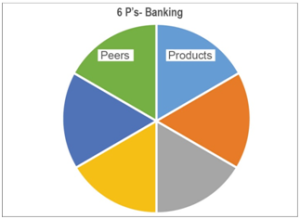
The major areas of what can be called ‘New Edge Banking’ can be ‘seen’ from 6-P windows – namely, Products, Processes, Places, People, Price and Peers.
Recently, Titan, the world’s 5th largest watch manufacturer, in collaboration with SBI launched the first contactless payment watches. It will enable SBI account holders to tap their Titan pay watch on a contactless POS without the need to swipe / insert an SBI Bank card. Payments up to Rs. 2,000 can be made without entering the PIN under this arrangement. Similarly, Amazon recently developed an Alexa payment app wherein Amazon Alexa would enable payments with voice using a personal code. In China, 98% of mobile payments go via two technology platforms – Ali Pay and Tencent We chat.

The products are expected to be channel agnostic. Customer-embedded experience would be the only key to growth irrespective of the products that are offered. Although the process of technological advancement started over the last few years, it has accelerated during the current pandemic. Each class of customers automatically shifted from physical transactions to technology-driven transactions. ‘Only seven out of 100 transactions happen at branches now while three years ago this was 20 out of 200’, says the SBI Chief in a recent interview to BBC. Although the reason for this shifting was mainly safety, the technological revolution has begun and it will lead to disruptive innovations.
Blockchain technologies will gradually be matched to applications that revolutionise the user experience across multiple industries. It may be integrated into Government agencies. Cryptocurrencies will rise in prominence but are unlikely to become part of the fabric of everyday banking. In today’s world, few countries hold digital currencies / virtual commodity – like Argentina, Thailand, Australia, Canada, China, Taiwan and so on, but the same are exposed to threats in terms of theft (by hackers). Brands that do hold cash in crypto form will be forced to find ways to keep the currency stable so that it can be easily and quickly swapped into ‘fiat currencies’ without swinging too far in value.
Debit / credit cards are being replaced slowly by Quick Response Code (QR code). QR Codes are squarish two dimensional barcodes that can be scanned into and read by electronic devises so that one can pay through smartphones instead of carrying plastic cards. Incidentally, in mid-September this year, RBI issued guidelines for banks to replace their existing debit / credit cards and to give the customers the choice to choose their transaction preferences – domestic / international transactions, limits to these new cards, etc.
Every banking organisation would be required to undergo ‘Business process re-engineering’. The traditional processes of deposit mobilisation and lending methods are slowly taking a back seat and may vanish in the near future as banking would no more be confined to ‘accepting for the purpose of lending’.

Banking has gradually reduced the fundamental principles of judgement-based decision-making to evidence-based. The mushroom growth of databases where the customer has his transactions, social interfaces and various other points, leaving behind a huge trail of his conduct, will form the basis of decision-making and effective credit assessment instead of the traditional way of only ratio analysis. Artificial Intelligence, Data Mining and analytics are increasingly being deployed to collect necessary evidence based on which sharper decisions can be made. Even the recorded interface provides lenders the opportunity to carry out some form of psychometric tests.
In order to compete in a world with increasingly blurred boundaries – where smart devices and platforms such as Google can deliver the banking experience, ride-sharing apps can supply loans, and cars can be distributed ledgers – banks must ruthlessly determine and play to their strengths by expanding their wings. With the way payment banks / small finance banks cater to remittances, opening of small business accounts and low income households and strengthening financial inclusion, they are no more stopping with these functions. Their strength is mass-level reach with a wide customer base and they are required to meet the target of 75% of their loans portfolio under priority sector advances. For example, India Post Payment Bank, AU Small Finance Bank… In the years to come they will increase their band width… and a few may even be converted into commercial banks.
Similarly, Urban Co-operative Banks (UCBs) are governed by co-operative societies as well as RBI. Earlier, these UCBs had been catering to all classes of customers depending on certain regulatory exposure norms. However, with the revised guidelines by the regulator in terms of exposure norms / priority sector targets (to be met by 2023 / 2024), the strategies adopted have changed 360 degrees. Now, their major thrust will be on small-ticket loans and landscaping of customer base.
IDFC Bank, which started its operations as a commercial bank in 2015 with high ticket products (post-merger with Capital First), gradually entered into retail banking. As on date more than 70% of the loan portfolio of the bank is under retail banking.
It is expected that all such banks, including other Public Sector Banks (PSBs), Private Sector Banks (PVBs) would draw strategies that will see them enter each other’s territory.
In the words of the Australian futurist author, Bret King (‘Banking Everywhere, Never at a Bank’), future banking will be invisible. Leading banks will use technology and far deeper customer insight to insert financial services at the customer’s moment of need, often at the expense of brand visibility.
A large percentage of bank branches are already operating at low profitability or at negative returns, but sometimes required by law to remain open. Covid-19 has changed the game and it is likely to compel the law to offer freedom to banks to take decisions on continuing with their respective branches. South Africa last year saw the arrival of its first digital-only bank – Tyme Bank. In future, most new banks are likely to be purely digital: These will popularly be known as Challenger Banks.
In the Indian context, where the unbanked population as on date is huge in numbers, brick and mortar banks may last only for a few more years, for the ‘click banking’ era has already penetrated in urban locations.
As predicted by a consulting firm report, in the next decade the banking industry will witness changes which have not been seen in the last 100 years. This will not be due to technological advancement but due to various socio-economic, demographic, environmental and regulatory changes. This might lead to people living longer, participating in economy, changing their jobs more frequently, being wealthier than their counterparts today, and healthier since they would be getting better support for physical and mental well-being.
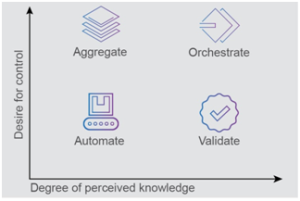
Services will be demanded and provided based on various features of the customer, such as the willingness of customers to control their transactions by FI, their knowledge levels, availability of time to perform transactions, etc.
Employees at front desks as well as back offices are soon expected to be replaced by robots. CRM (Customer Relationship Management) will be the key to enable customers to choose their bank. HDFC Bank has its humanoid robot IRA (Intelligent Robotic Assistant) / EVA (Electronic Virtual Assistant); and SBI launched SIA – an AI-powered chat assistant that addresses customer inquiries. It checks whether the customer is sad or happy. And an added feature of iris recognition (it’s a technique which uses the irises of an individual’s eyes – having unique and stable patterns and which can be seen from some distance) might empower these robots even further. A major advantage of Iris Recognition is its template longevity or stability – mostly, a single enrolment can last a lifetime. Hence, you never know in future you might visit a neo-branch where IRA or SIA might surprise you by identifying you and greeting you with, ‘Good Morning, Mrs. XXX, how may I assist you?’

Other stakeholders like bank auditors, stock auditors, valuers, advocates are also required to develop / acquire skill sets such that they can meet the requirements generated by future customers and should be able to critically examine the way these requirements are catered to by bankers.
‘This is not the one size fits all’ era any more. Some consumers will opt for an autonomous banking experience when they are ‘time-poor’, lack knowledge and have a high level of trust in their bank to do the right thing by them and confidence in their competence to do what they say they will do, whereas others might want more hands-on involvement. It will all be by choice and the winning bank of the future will be adaptive to their needs. The category of customers would decide the pricing factor. A more technology-driven banking would require huge capex investments in advanced technology resulting in relatively higher pricing with value to service / experience that they offer to their customers. With competitive markets, though margins are expected to shrink, the major thrust will be on bottom line and improving NIMs.
Flexible price based on current market demand (dynamic pricing), loyal customers to be benefited by concessional pricing (loyalty pricing), pricing depending on spending / consumption pattern (behavioural pricing), these are the various ways in which pricing may be decided. The pricing approach is shifting from cost-plus pricing to value-based pricing.
Many of the established banks will still be active in the years to come. A handful will disappear, either through bankruptcy or through industry consolidation. The banks that survive may also look dramatically different, shedding unprofitable areas of business to focus on niche markets. Survival of banks has been challenged with account number portability coupled with universal banking, with which the expectations of consumers will surge to get all kinds of banking services under one roof.
The next few years will bring major consolidation in banking as financial giants attempt to acquire the bright young technologies and businesses that will assure their survival. A few new brands will maintain their independence and reach a scale where they too will be buying up the new disruptors. The most successful marketplaces are expected to offer more than financial services. It is unlikely that many of the tech giants will become banks for they will avoid excess scrutiny from international regulators and prevent cash being tied up by strict capital requirements. They will work with existing banks and some of the new challengers to support these new services.
The regulators are still playing catch-up. This age of innovation will see a raft of new laws and regulations to help protect consumers and force banks (new and old) to ensure their business models are robust and fair.
If a customer has multiple banks’ apps on his mobile, the ‘money manager app’ can analyse the data and provide financial solutions. The data is encrypted and no password / key is asked under Open Banking. It’s easy to use and provides a frictionless experience. The true impact of Open Banking will not be felt immediately but will be seen as a game-changer for the banking industry by the end of the next decade.
To conclude, much has changed in the last two decades between 2000 and 2020; the world saw the invention of the iPhone, the birth of Facebook, the rise of Google and Amazon’s breakaway from selling books to selling everything. This is ‘The New Edge Banking’ where FIs will not be worried about the five-dollar corpus or the two hours for implementation… rather, they will effectively utilise their three minutes strategically for Customer Delight.









